Eight
territories.
One
practice.
A clinical doctrine. Eight working principles. Each one shapes how we read the body, what we formulate, and where we begin.
Two traditions, one body.
Eastern wisdom and Western rigor were never opposites. The body responds to whichever is most useful in the moment.
Functional medicine taught us to read the body as a system – where root-cause tracing meets evidence-based intervention. Ayurvedic and Eastern traditions, refined across millennia, taught us how to listen to the rhythms that pulse, the patterns that recur, the constitution underneath the complaint. Both traditions ask the same first question: what does this body need to come back to itself?
Here, the methods are tools rather than tribes. Medical acupuncture sits beside hormonal panels. Adaptogens sit beside methylated B-vitamins. The patient is the unit; the protocol is what the patient actually needs. Where the lineage offers wisdom, we draw from it. Where modern testing offers precision, we use it. Both belong on the same chart.
The patient is the unit. The methods serve the outcome.


What the world adds, the body must clear.
Modern life loads inputs the body was never designed to hold indefinitely.
Pesticide residues. Microplastic-derived endocrine disruptors. Heavy metals from old plumbing. Mold spores in water-damaged buildings. Glyphosate in conventional grain. Light pollution that pulls the circadian rhythm out of phase. Each input alone is small. Together, they are the daily toxic burden every modern body carries.
The clinical work isn't to demonize a single villain – it is to lighten the load. Functional detoxification means giving the liver, the kidneys, the lymph, and the gut microbiome the room and the substrate to do what they already know how to do. We don't override the body's clearance pathways. We support them.
Restoration begins with reducing the burden.
Vitality has cellular architecture.
Fatigue is not a personality trait. It is a measurable signal.
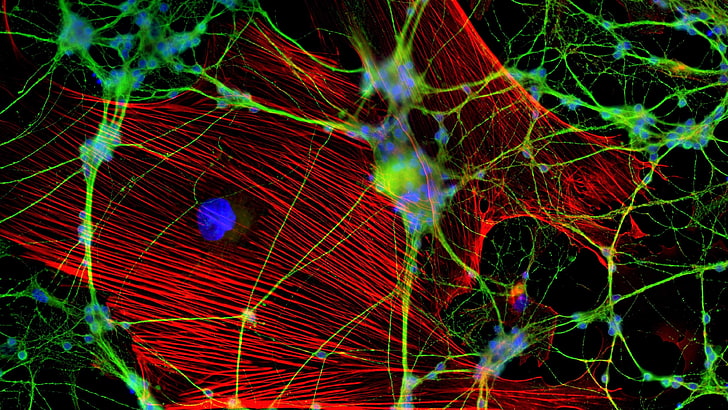
Every felt sense of energy begins inside the cell. Mitochondria turn substrate into ATP – the body's working currency. When that machinery is starved of methylated B-vitamins, electrolyte balance, or bioavailable cofactors, the felt experience is the same: tired, foggy, slow. Most "energy support" misses this entirely. It pushes a stimulant past a starved system.
The clinical view is upstream. We look at methylation status, electrolyte chemistry, glucose handling, and cellular hydration. We rebuild the architecture before we ask the body to perform. Real energy is not adrenaline. It is the steady output of a system whose substrate work is being done.
Cellular energy is the canvas all health is painted on.

The quiet fire matters.
Most modern disease begins as inflammation no one notices.
Acute inflammation is the body's repair signal – heat, swelling, the mobilization of the immune response. It is not the problem. The problem is silent: chronic, low-grade inflammation that smolders for years, raising hsCRP, shifting cytokine balance, and remodeling tissue long before any symptom names itself.
The triggers are familiar by now: poor sleep, chronic cortisol elevation, gut permeability, a single dietary input the body has decided not to tolerate. The clinical answer is rarely glamorous. It is to find the smolder, to interrupt it, and to give the system the inputs that cool – omega-3s, polyphenols, restorative sleep, the elimination of what the body keeps inflaming around.
Cooling the fire is rarely glamorous. It is almost always essential.
Add years to life. Add life to years.
Lifespan and healthspan are different metrics. Both count.
"Longevity" is a thin word for what we mean. The clinical work is not to add years of decline; it is to compress decline into the smallest possible window at the end. To stay lucid. To stay mobile. To stay present. To carry strength into the years where most people lose it. Survival is not the whole goal.
The biological levers are real and increasingly well-mapped: NAD+, sirtuin activity, autophagy, senescent cell clearance, hormesis. The human levers are equally real: sleep architecture, daily movement, the relationships that hold a life together, the work and meaning that pull a body forward. Both belong in the protocol. Neither alone is enough.
Survival is not the whole goal.


Aging is not only a clock.
Biology responds to inputs. The work is to know which inputs need to move.
Aging is not only a clock. It is the running sum of what the body has been given to work with – hormones, sleep, recovery, structural support, the daily inputs the system has been asked to integrate. Hormonal optimization, peptide-supported recovery, fascial and joint integrity, skin and connective-tissue substrate – these are not cosmetic addenda. They are the levers where biology is actually moving.
The clinical view here is honest: we look for the levers that are slipping, and we meet the body where it is. Anti-aging without root-cause work is cosmetics. Root-cause work without attention to how the body actually feels and moves is incomplete. Both belong in the same protocol.
What you feed the system shapes what the system becomes.
What the body recognizes, the body can use.
Botanicals, minerals, and bioavailable nutrients are not decoration. They are the substrates the body has used for millennia.
The body recognizes what it is built to recognize. Methylated folate is not the same molecule as folic acid. A bioavailable magnesium glycinate is not the same as the cheap oxide that walks through the gut and out the other side. A whole-plant adaptogen carries cofactors a synthetic isolate does not.
The standard the practice formulates to is unambiguous: third-party tested, evolutionarily appropriate, free of the synthetic sweeteners and artificial colorings that have no business in a clinical product. We choose the form the body actually uses. The body knows the difference.
The body knows the difference.

Repair systems can be guided.
Regenerative biologics belong where they are appropriate, targeted, and held to clinical standard.
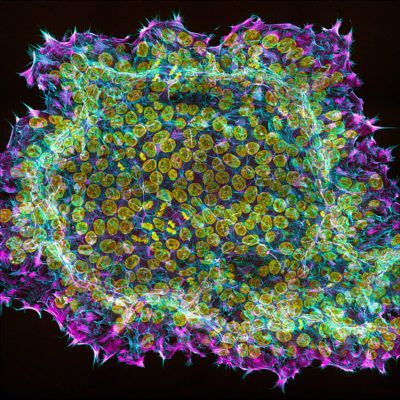
Peptides – BPC-157, TB-500, the GLP-1 family, growth-factor analogues. Exosomes. Regenerative protocols built on understanding which signals the body uses to rebuild itself. The clinical bar for these is higher than the bar for a daily supplement, not lower. They are powerful because the signaling is precise.
The practice considers biologics where the indication is clear, where the protocol is supported by the evidence, and where the patient's broader system is ready to receive the signal. We do not reach for biologics first. We reach for them when the foundation is in place and the targeted intervention is what the body actually needs next.
Targeted. Appropriate. Held to the same clinical seriousness as any intervention.
Where care begins.
Eight principles, one practice. The next step is a single conversation.